The Benefits of Post-Workout Nutrition
What to Take 30 Minutes After a Workout
Protein - The protein you consume post sweat session can be a part of your body for up to a decade. Choose wisely!
Fast-Digesting Carbs - Carbs go straight to muscle fibers and are stored as glycogen, as well as help with retention of the catabolic hormone cortisol.
Supplements - Supplements are a useful tool to help meet your body’s nutritional wellness and performance goals – especially post-workout!
What About Hydration?
Making sure to hydrate after exercise is crucial to post-workout recovery. Your muscles are about 75% water, so they need fluids all the time. Good hydration aids your body with digestion, helping process the carbs and protein in your recovery shake or snack. And if you've sweat, you need to get fluids and electrolytes back into your body quickly.
The chief electrolytes are calcium, chloride, potassium, magnesium and sodium, and they are responsible for regulating the flow of nutrients throughout your body. If you are dehydrated after a workout, the protein synthesis that rebuilds muscles slows and delays your recovery.
There are many electrolyte-enhanced waters available and coconut water is a great option for hydration that contains naturally-occurring electrolytes and is low in sugar and calories.
Just remember that water alone is not the answer for proper recovery!
Weight Management – We know that this is a big topic for lots of people and one of the primary reasons that people exercise at all. Let’s talk a bit about the science around exercise, recovery and weight management. Generally speaking, weight management all comes down to your body’s metabolism. The term metabolism is used to refer specifically to the breakdown of food and its transformation into energy. A “higher” metabolism is one that burns energy (read: calories) quickly and efficiently. A “lower” metabolism is one that is less efficient. Muscle tissue burns more calories – even when you're sleeping – than body fat. This means that someone with a better lean muscle: fat ratio has a higher metabolism.
Metabolism consists of two processes that affect your body weight – Anabolism, which is the buildup of substances, and Catabolism, which is the breakdown of substances. Once your body has used up all of its glycogen during exercise, it goes from being in an anabolic (muscle-saving) state to a catabolic (musclewasting) state. Your body starts to break down your hard-earned muscle to use for energy. Ultimately, this lowers your metabolism and makes it harder for your body to burn fat. Keeping that lean muscle is a crucial part of keeping your metabolism revving, which is another reason to make sure that you’re consuming carbs as part of your post-workout shake or snack.
What is Post-Workout Recovery?
If you are exercising regularly, you are well on your way to better health and a happier life, but if you think your workout ends when you step off the treadmill, you’re missing out! Nutrition plays a major role in the effectiveness of exercise, which makes post-workout recovery key to your success – no matter whether your goals are wellness or performance-based.
Glucose is a simple sugar and sugars are carbohydrates. During exercise, your body starts with glucose in your bloodstream and then burns some (or all) of the roughly 1800 calories of glucose that is stored in your muscles and liver for energy. This stored glucose is called glycogen. Following exercise, your muscles need carbohydrates to replenish the glucose that was burned. Because exercise also stresses and tears muscle fibers in your body, you also need a good, clean source of protein to repair those tissues.
Your muscles need carbohydrates to replenish the glucose that was burned.
These two components make up the basic nutrition of post-workout recovery. So how much should you have? Most dietitians suggest replacing the calories that you have just burned (or up to 10% more) with a 3-to-1 carbohydrate-to-protein shake or snack after exercise. Consuming this will help give your body the energy and materials that it needs to repair, save muscle and keep your metabolism high.
Timing Your Recovery
Post-workout recovery is also affected by when you consume the protein and carbs. Your body is looking for replenishment immediately after exercise, so the sooner the better. 30-45 minutes is recommended and to help your body optimize the nutrients. To speed that process, you can consume the right ratio in liquid form, which is easier for your body
to digest.
Benefits of Proper Recovery
Recovery isn’t just about replacing energy and repairing muscles. There are other things that happen to your body when you exercise that proper recovery can help with. Here are a few of them:
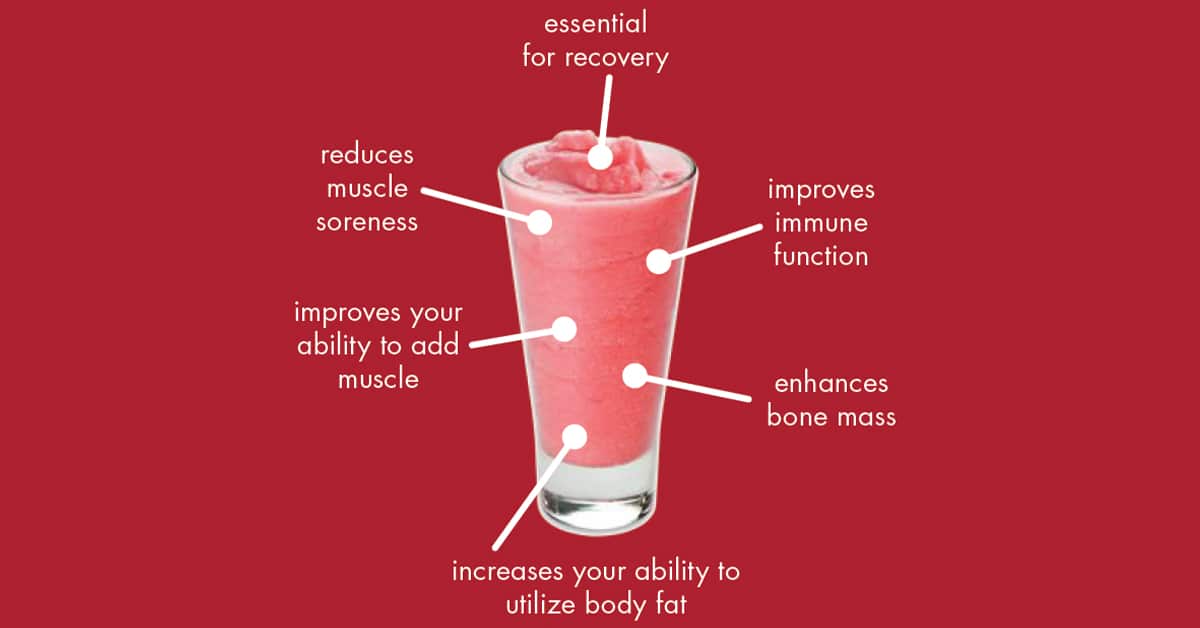
Immune System – Whereas regular, moderate exercise can enhance immunity, research has shown that during intense exercise the body produces certain hormones that temporarily lower immunity. An Australian study showed that eating carbohydrates after intense exercise helps to minimize exercise-induced immune problems and can aid the body's recovery. Try adding natural antioxidants from berries to your recovery shake or snack for an extra boost to your immune system!
Soreness & Inflammation – Muscle soreness after exercise is a sign that you caused damage to your muscle tissues. This is actually a good thing, although it may not feel that way. When this damage happens, your body starts the repair process by triggering inflammation. Post-workout nutrition can really be helpful here to reduce the soreness and inflammation and help muscles grow back stronger. The amino acids in protein is key to that rebuilding process. Combining fruits and vegetables in your post-workout shake or
snack can give your body vitamins and minerals – like vitamin C and zinc – that promote fast healing.