
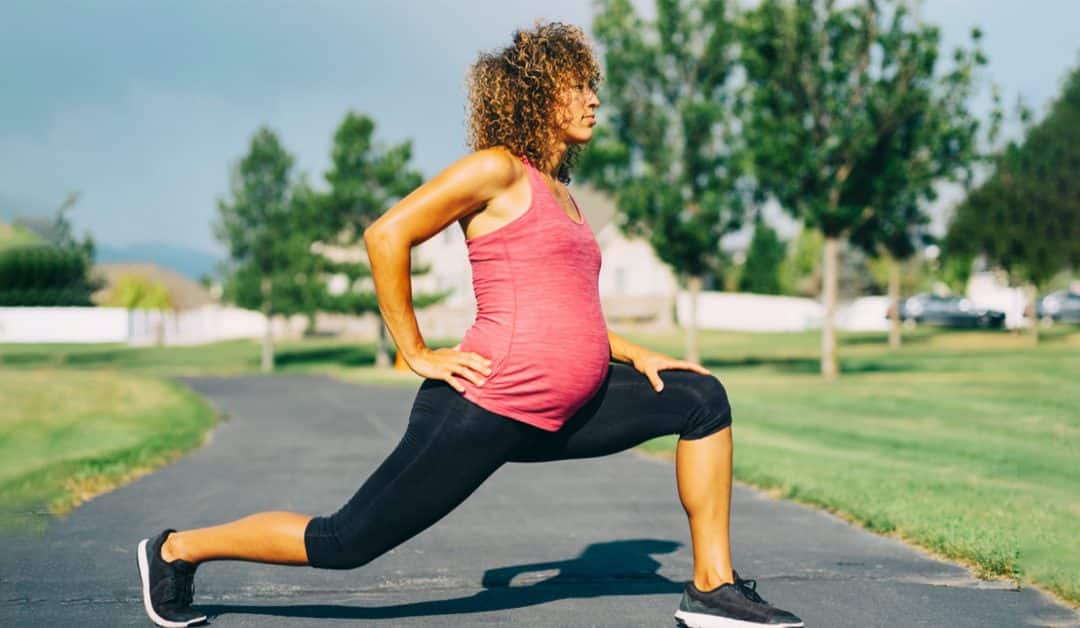
Exercising while pregnant can be very beneficial for mother and baby when done safely. Some physical benefits of prenatal exercise include less joint/back pain, less swelling and bloating, help maintain healthy weight gain and blood pressure, prepare you physically for the upcoming labor and potentially make recovery easier/quicker. Another benefit of being active during pregnancy is that exercise can boost your mood and lessen anxiety.
Unless advised against exercise from your doctor, you can continue/begin exercising at any point during your pregnancy. However, pregnancy is not the time to start a brand new kind of exercise. Hiring a personal trainer who is experienced in prenatal exercise is one of the safest options for all pregnant women, but especially if you were not exercising previously. Walking is a generally safe exercise if hiring a trainer is not feasible. An appropriate exercise program for pregnancy should include cardio, resistance training, pelvic floor strengthening and relaxation exercises, postural exercises and gentle stretching.
First Trimester
Generally, most exercises you were doing pre-pregnancy are safe to do while newly pregnant. During the first trimester, many women experience nausea or fatigue and exercise is limited based on energy and nausea level not necessarily exercise itself. Listening to your body is important and if rest is warranted then it is best to not put extra stress on your body. Exercising on the days you feel best is the most beneficial and keep in mind many women get their energy back by the end of the first trimester so your regular exercise routine is likely to resume then.
Second Trimester
Some modifications to exercise will need to be made as your pregnancy progresses. These changes are mostly due to the growing bump and inability to perform the exercises comfortably. It is also recommended to stop all supine (laying flat on your back) exercises after 20 weeks. The data on this recommendation is mixed and ultimately up to the expecting mother. If you are experiencing difficulty breathing or dizziness while laying on your back then modify those exercises to an incline position if possible. If you are not experiencing any signs of discomfort, you can continue flat exercise if you choose to.
Third Trimester
As your bump continues to grow, many exercises will become difficult or uncomfortable. Some modifications can be made (for example, wider stance for squats or leg press) to make exercise more comfortable, however if there is not a feasible way to adjust your body/machine then it is best to discontinue that exercise until after the baby arrives. Cardio speed may need to decrease as the baby grows and limits the ability to inhale fully. Fatigue and pain are more limiting factors for exercise in the third trimester, so listen to your body and adjust resistance and duration accordingly. Gentle stretching and pelvic floor relaxation techniques can help prepare for labor and can be done all the way up until delivery.
The most important rule to follow when exercising during pregnancy is to listen to your body. Rest, modify, slow down or discontinue exercises as you feel appropriate.